Solid surfacecomposition, production and properties of the ALBELA material
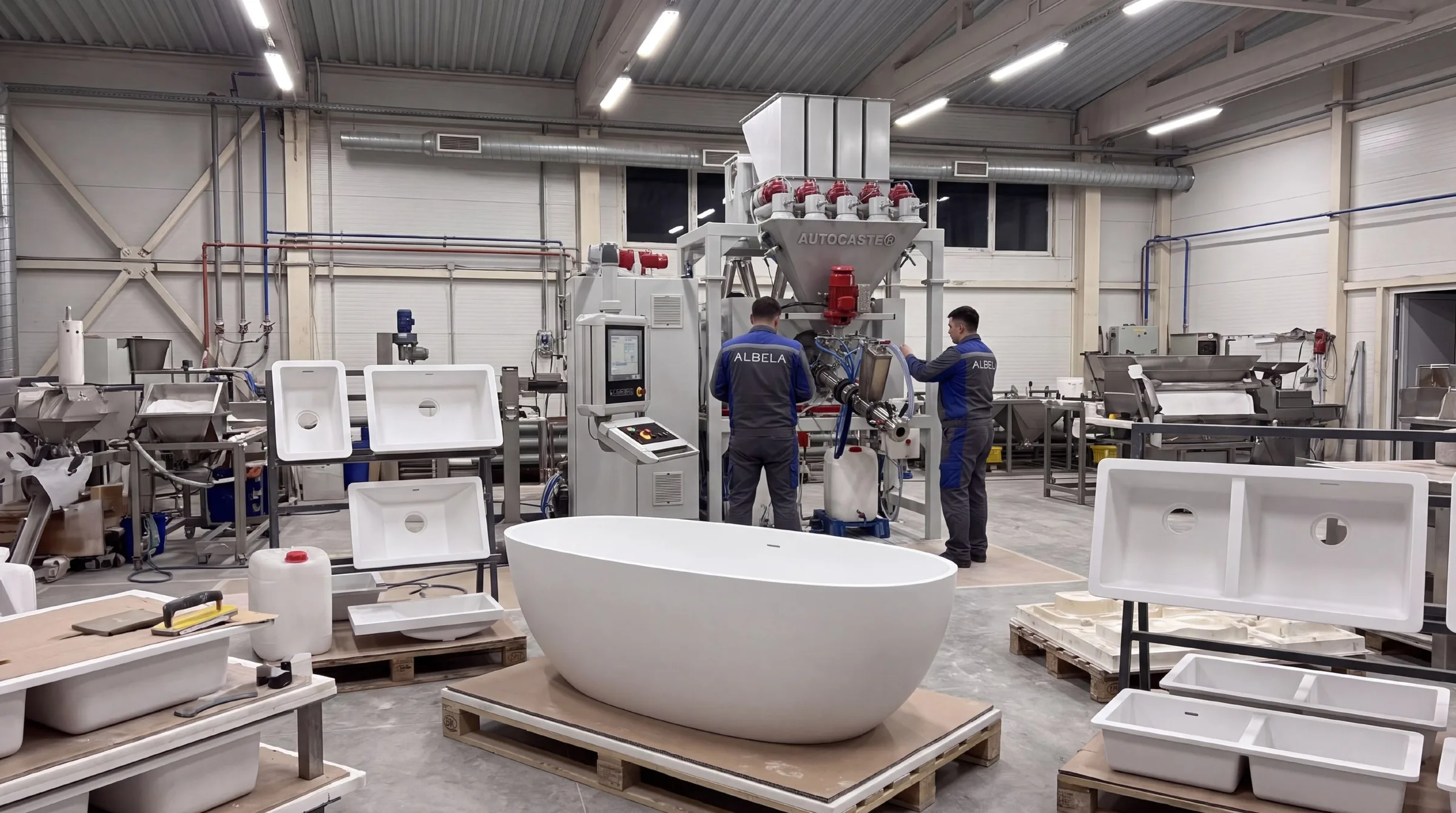
ALBELA basins, countertops and mirrors are made from solid surface sheet cast in house — thermoformed, milled and seamlessly bonded; bathtubs and selected models are cast in a mould. Acrylic stone is a type of solid surface based on acrylic (PMMA) resin and a mineral filler. Below is what the material is made of, how production works, and how this differs from what is usually sold under the same phrase "artificial stone".
What the stone is made of
The cast composition consists of four groups of components. The proportions and the purity of the raw materials determine almost everything: strength, behaviour under heat, colour stability, and whether the surface can still be restored ten years from now.
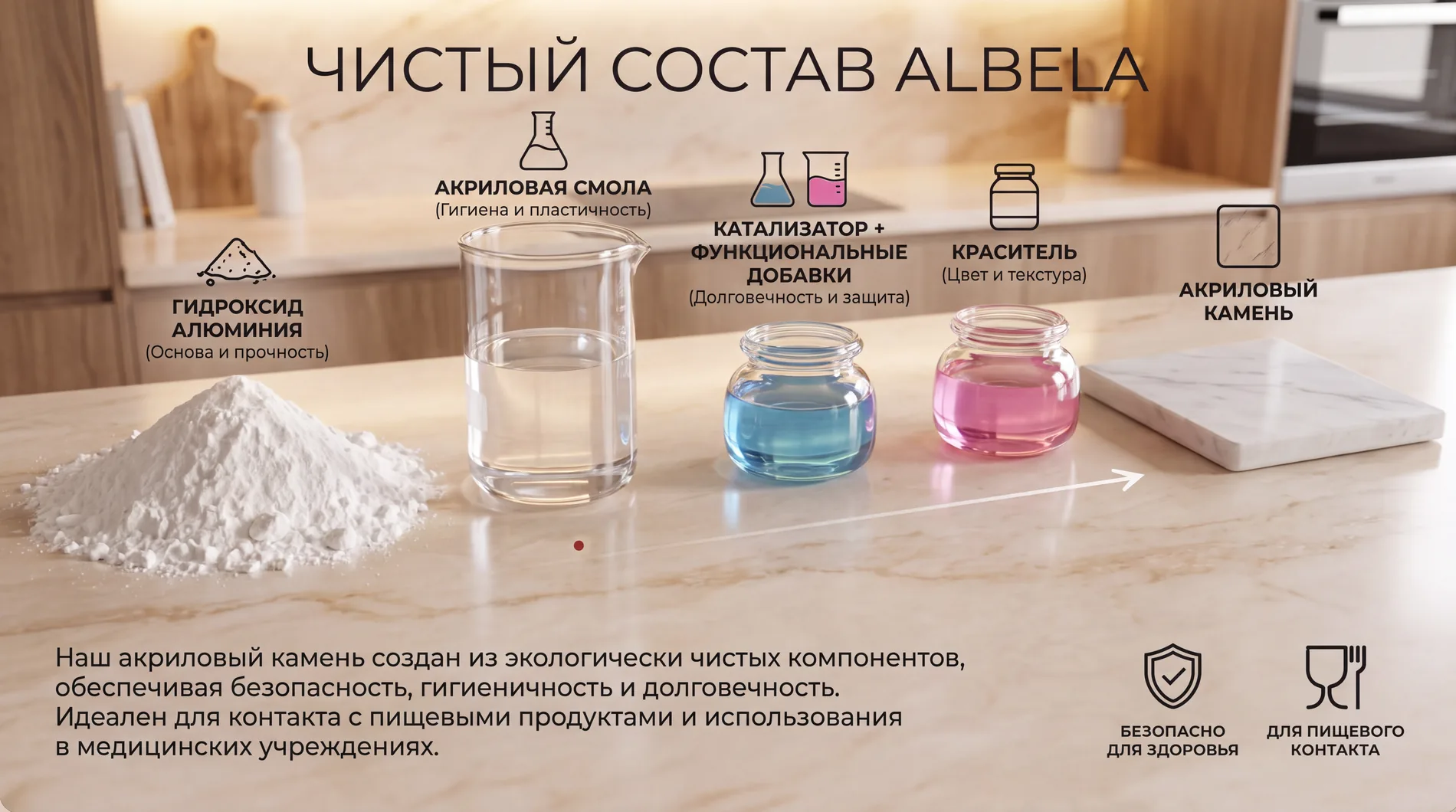
- Aluminium trihydrate (ATH)
- A refined mineral filler derived from bauxite ore. Provides the bulk of the mass, strength, fire resistance and chemical resistance
- Acrylic resin (PMMA)
- The binder. Responsible for plasticity, thermoformability, surface smoothness and the absence of odour under heat
- Catalysts and functional additives
- Formula stability during polymerisation, UV protection, resistance to fading and household chemicals
- Pigments
- Even colour throughout the full thickness of the slab and reproducible texture from batch to batch
How it is made in Kirishi
A 7,500 m² workshop inside 17,000 m² of buildings, on our own 3 ha site with a rail siding. A full cycle: from raw-material preparation and binder synthesis to casting, machining and packaging of the finished piece.
Capacity, equipment, quality control and the route of a piece are covered on the Production page.
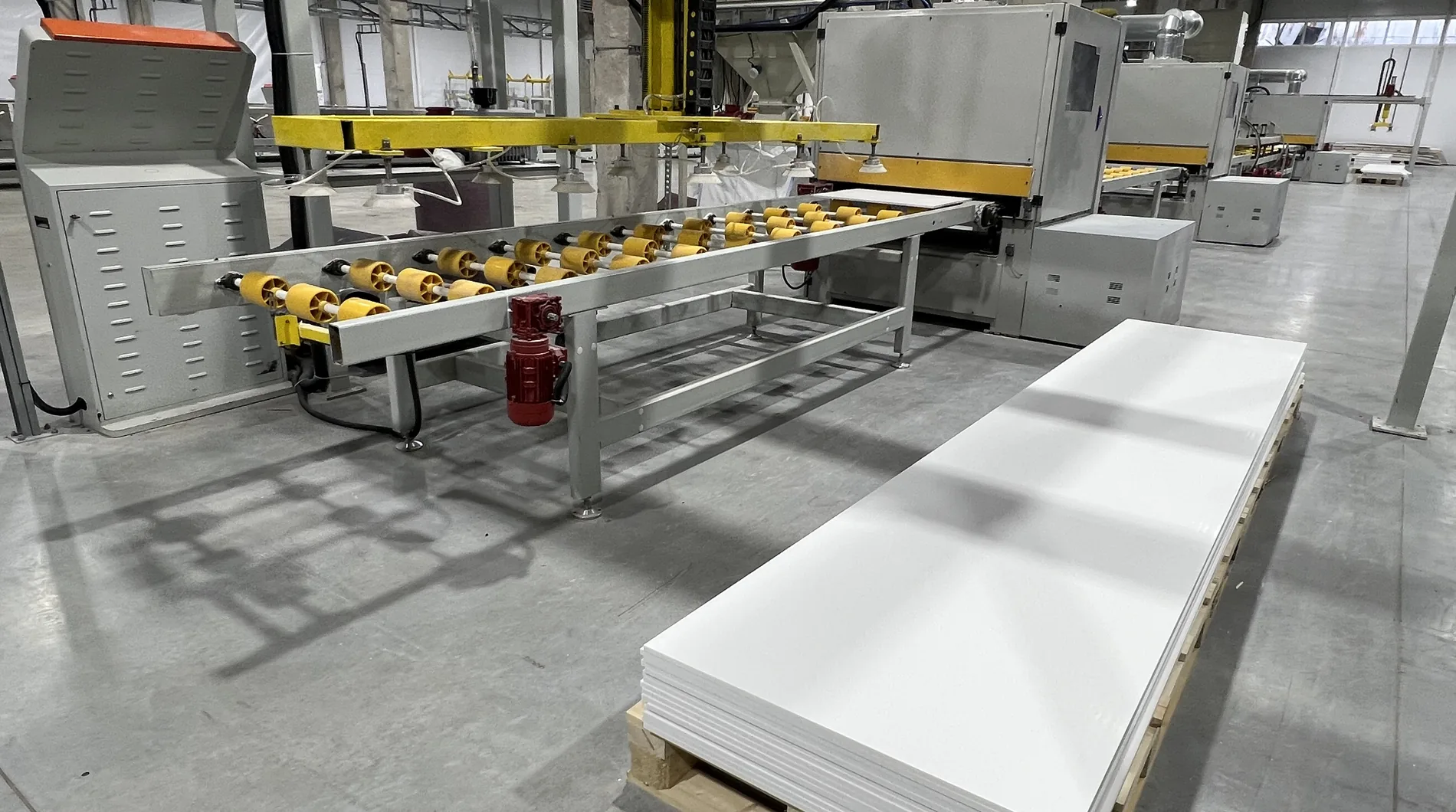
RESPECTA and AUTOCASTER® mixing systems
Dosing and mixing run continuously and under vacuum. This removes the human factor from the process, along with the main cause of defects in cast stone — micropores and air bubbles that show up as cracks a year or two into use. The precision of automated casting keeps the piece's geometry within fractions of a millimetre.
RESPECTA is a registered trademark of SARMATEKH, with equipment made in Germany. AUTOCASTER® is designed and built in-house in Kirishi. We service and tune both lines ourselves, with no dependence on outside contractors.
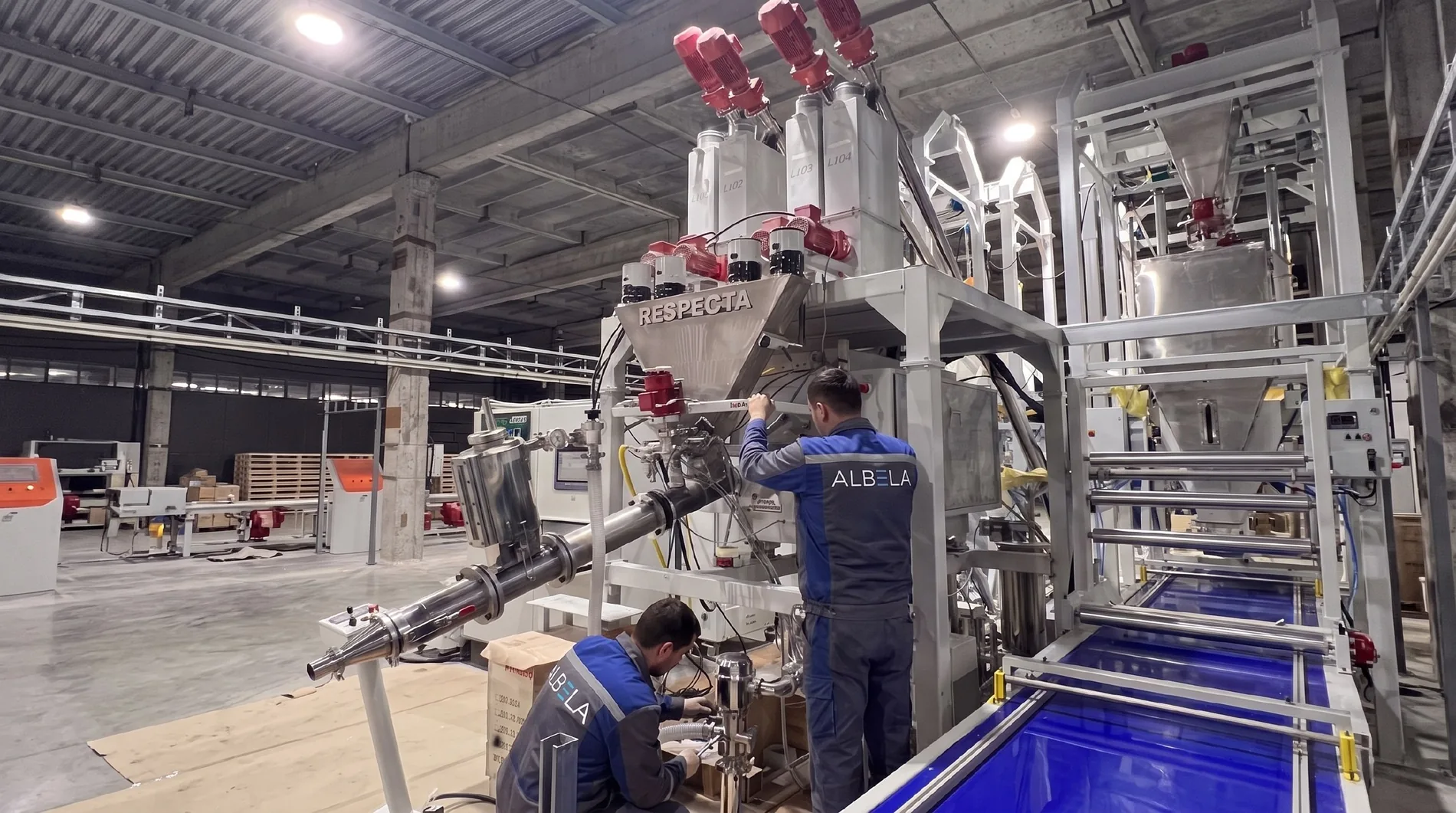
Laboratories and chemical control
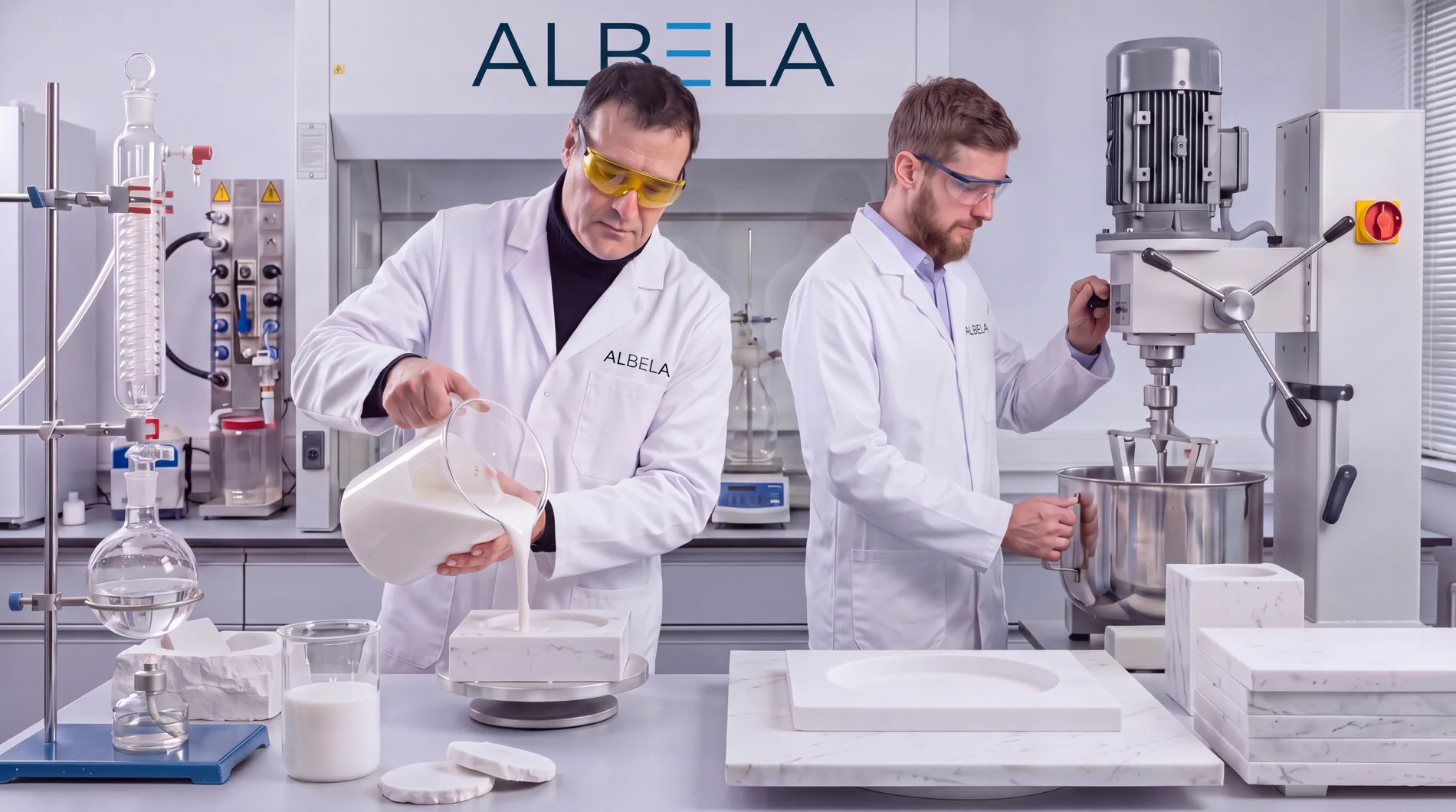
The site has three laboratories of its own and two test benches. They check incoming raw materials and finished pieces on the way out: thermal resistance, strength, structural uniformity. Formulas are also developed here — we run the process from synthesising the binder formulation to tuning the material's light transmission.
What this delivers in use
- Seamlessness
- Parts are bonded with the same resin and sanded flush. The join between basin and countertop is invisible and does not trap dirt
- Non-porous surface
- The material does not absorb water, coffee, wine or cosmetics, and does not hold odours. Mould and mildew have nowhere to take hold
- Repairability
- Scratches and wear come off by sanding and polishing on site, with no need to remove the piece
- Thermoforming
- Under heat the slab takes on complex shapes — hence the smooth radii, bent edges and one-piece basins
- Colour stability
- Pigment runs through the full thickness rather than sitting on top: wear does not shift the shade
| Parameter | ALBELA · acrylic resin (PMMA) | Polyester stone with styrene |
|---|---|---|
| Binder | +100% acrylic resin, styrene-free | –polyester resin with styrene |
| Styrene emission | +none | –possible, increases when heated |
| UV resistance | +does not yellow | –yellows over time |
| Thermoforming | +deep draw, stable geometry | –limited, risk of cracking |
| Seams and joints | +monolithic, visually seamless | –seam appears over time |
| Repairability | +fully restorable by sanding | –edges and cloudy patches remain |
| Impact toughness | +higher, more ductile | –lower: chips and micro-cracks |
A detailed look: where styrene in solid surface comes from and why it matters
What backs this up
- Warranty period
- 2 years on all products
- Extended warranty
- 8 years, limited — covering structural integrity and material stability
- Service life
- 10 years
- Documents
- Certificate of conformity ROSS RU.NV78.N07547, fire safety certificate SSBK.RU.PB23.N00153, QMS to GOST R ISO 9001-2015 — download in the Documents section
What people usually ask about the material
Are solid surface and acrylic stone the same thing?
Essentially, yes. Solid surface is the international name for the category of cast composite materials. Acrylic stone is a type of solid surface in which the binder is acrylic (PMMA) resin. In the Russian market the phrase "artificial stone" is also used for quartz agglomerate and for polyester compounds, so it is worth checking the actual composition rather than relying on the name.
How does acrylic stone differ from quartz agglomerate?
In binder composition and how it behaves in fabrication. Agglomerate is 90-93% crushed quartz, so it is harder and more scratch-resistant, but it cannot be thermoformed and cannot be restored by sanding: damage stays permanently. Acrylic stone is softer, but it bends under heat, joins without a visible seam and can be repaired on site.
Can a scratch be removed at home?
Yes, on a matt surface this is usually possible. Shallow scratches come out with fine-grit sanding and polishing, with no need to remove the piece. Deep chips and gloss-surface damage are best left to a technician: the material fully recovers, but needs the right sequence of abrasive grits.
Does the material yellow over time?
Acrylic resin is UV-stable and does not yellow the way polyester compounds do. Colour shifts on acrylic stone pieces are usually caused by ingrained dirt rather than the material itself, and these come off with cleaning or polishing.
Is solid surface safe for contact with food?
The material is non-porous, does not absorb liquids and does not release volatile compounds at household temperatures — unlike polyester compounds containing styrene. The material carries a certificate of conformity, a fire safety certificate and a quality management system certificate to GOST R ISO 9001-2015 — these and the test reports are published in the Documents section.
What warranty applies to ALBELA products?
The warranty period is 2 years on all products. An extended limited warranty of 8 years also applies to the structural integrity and stability of the material. The service life of the products is 10 years.