Care guide
In-house casting · Kirishi
Solid surface: pros and consan honest look before buying a bathtub, basin or countertop
Weighing stone against cast iron, steel and acrylic? Below is a rundown with no marketing gloss: what ALBELA solid surface delivers, what to be ready for, and how it compares with traditional materials.
Strengths
Clear advantages
- Look and feel. A premium matt finish that's always warm to the touch — unlike cold steel or cast iron.
- Acoustic comfort. Stone absorbs sound remarkably well — running water is barely audible.
- Full repairability. The material's key advantage: you don't have to live with a chip or an ingrained scratch, or replace the piece — the surface can be sanded back to factory condition with Stone Polish paste or professional tools.
- Hygiene. No micropores means the material doesn't absorb odours or grime, and bacteria can't take hold on it.
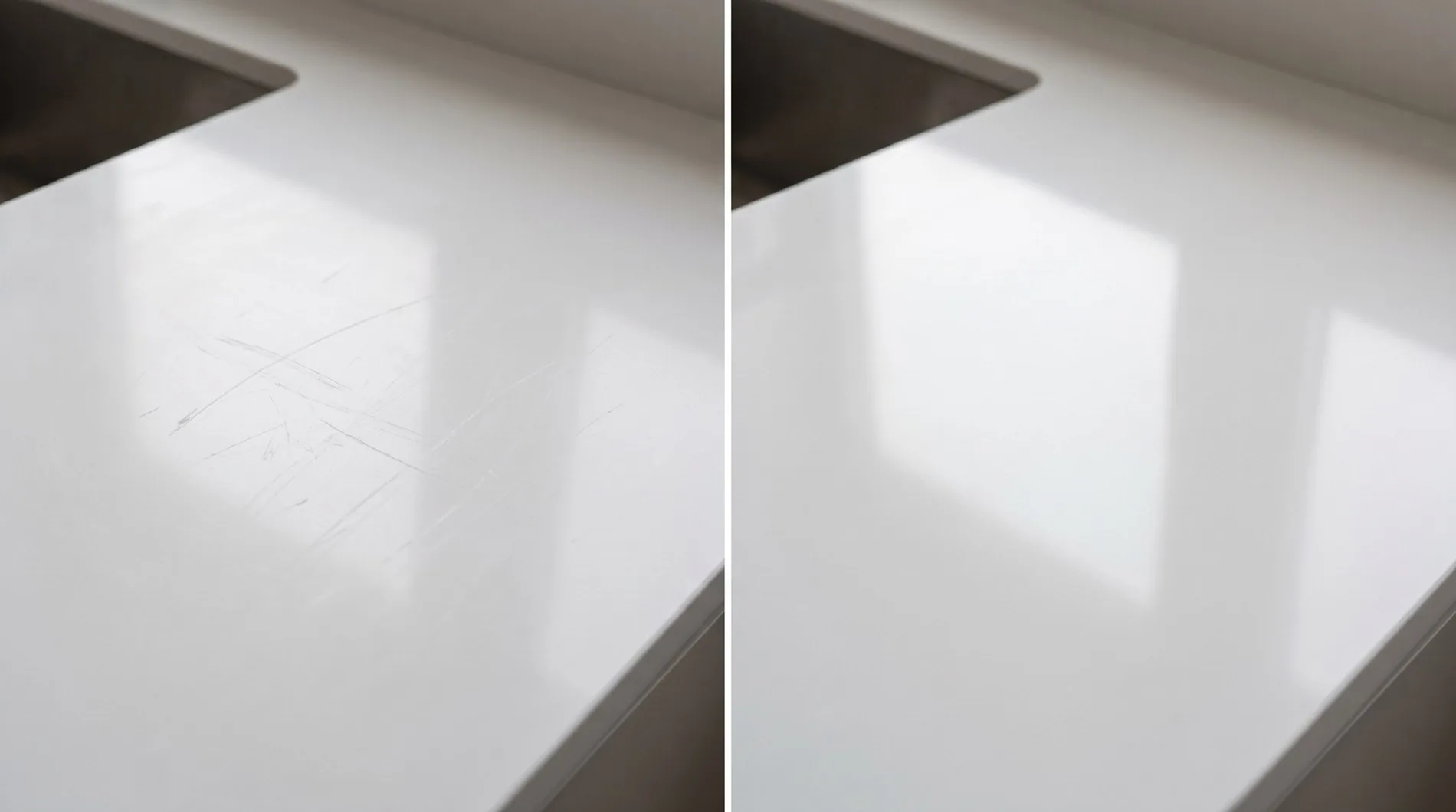
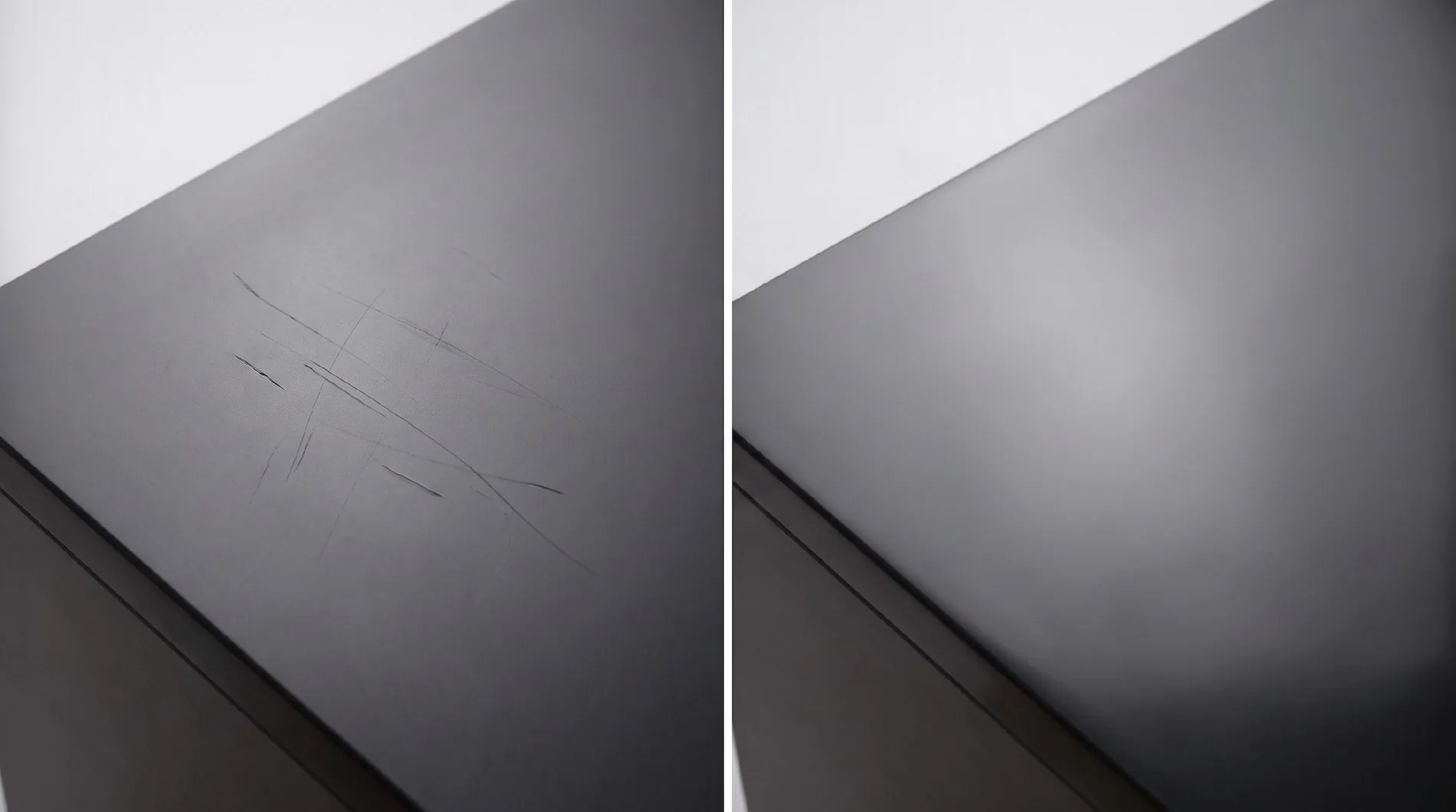
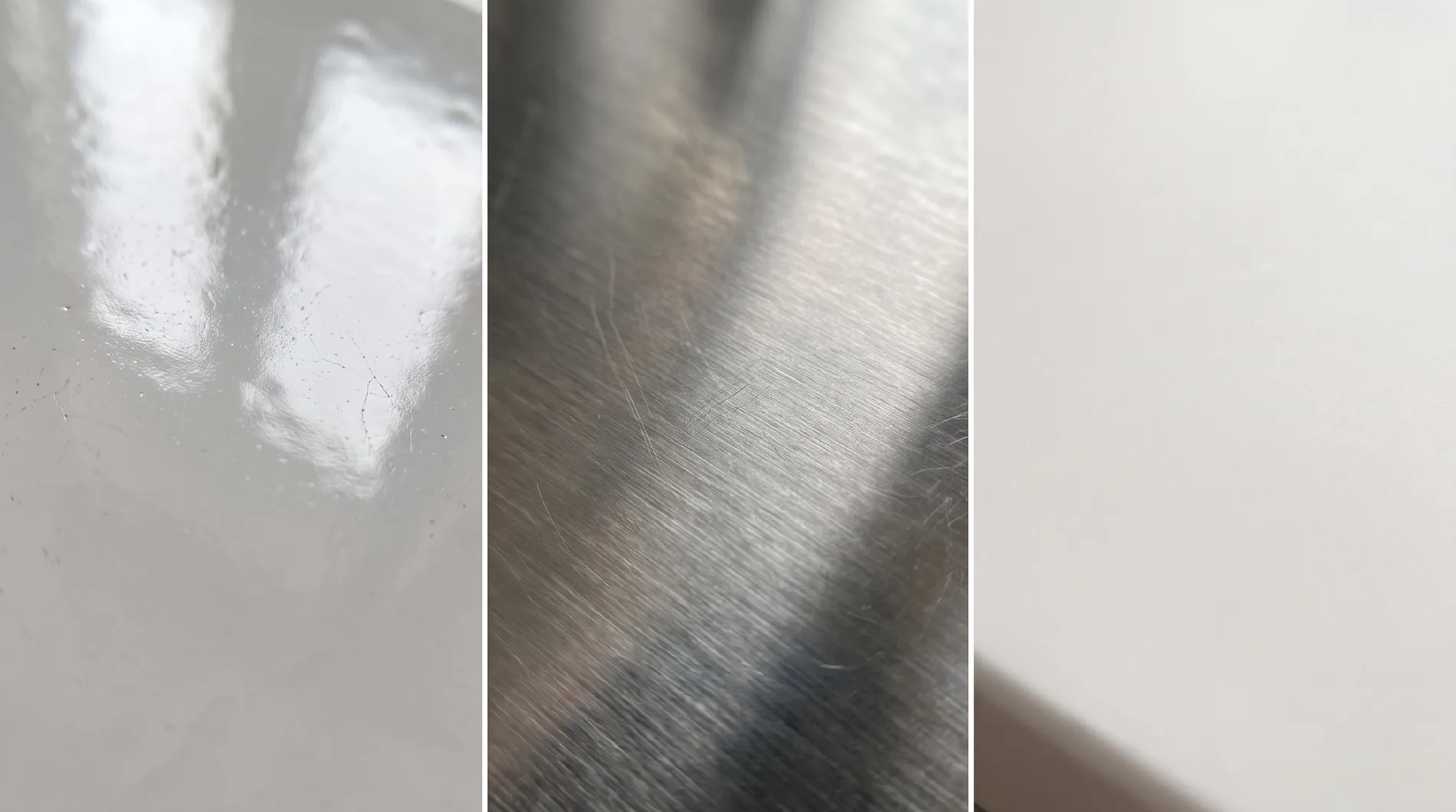
Left — a scratched section, right — the same spot after polishing. Click the image to enlarge.
What to expect
Downsides — and how to handle them
Limits
Sensitivity to strong dyes.
Spilled wine, antiseptic green or strong coffee are best wiped up right away rather than left overnight.
Not critical: a set-in mark comes off with Stone Polish paste or polishing.
A temperature limit.
Sudden thermal shock isn't ideal for the material — for example, draining pasta water straight into a dry basin.
Fix: run the cold tap at the same time as you drain boiling water.
Weight.
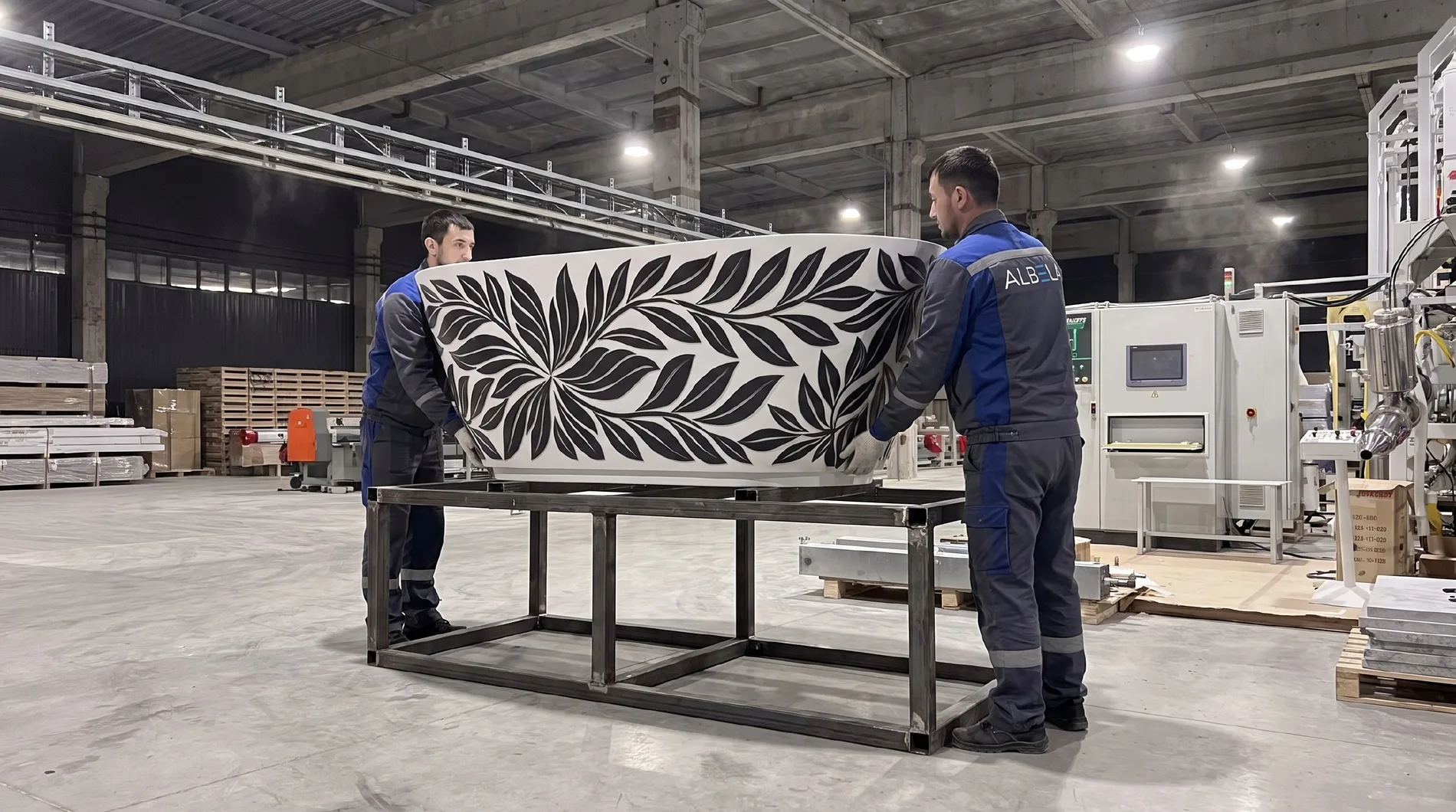
Stone pieces are heavier than acrylic equivalents (though lighter than cast iron). A bathtub needs solid floor support and careful installation.
Check your floor's load capacity in advance, especially in older buildings.
Verdict
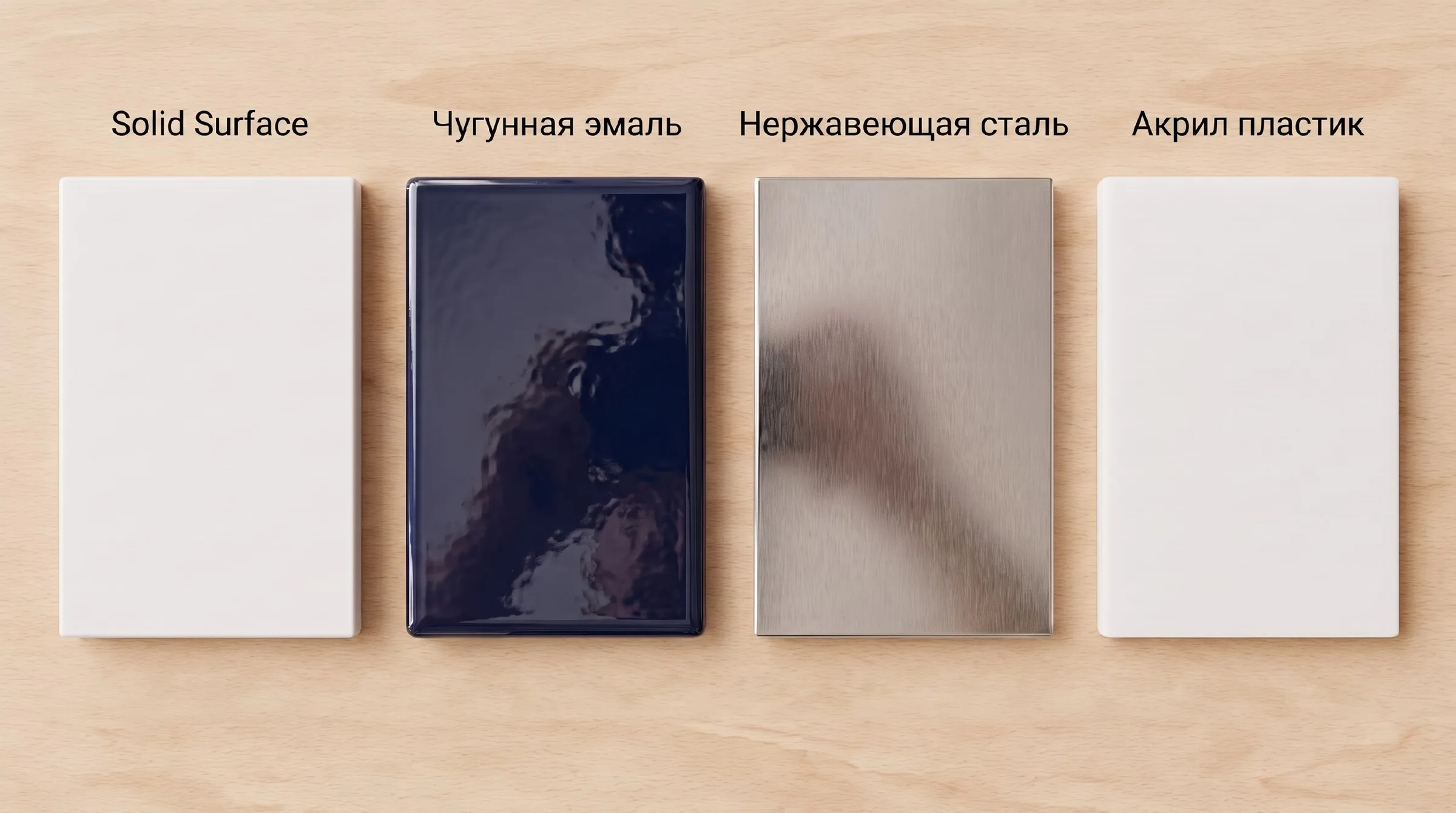
Solid surface vs traditional materials
- Against cast iron: a far wider range of shapes, nicer to the touch, and easy to repair locally — a chip in cast-iron enamel can't be fixed that way.
- Against steel: completely silent, and holds the water's warmth for noticeably longer.
- Against acrylic: feels like a genuine monolith — stronger, more resistant to deformation, and more refined-looking.
For the full technical composition, see the Material page; for daily care and a stain-removal chart, see the care guide.
Comparing materials for a specific piece? Bathtubs · Countertops · Kitchen sinks · Basins