How to care for solid surface productsuse, cleaning, and an honest look at what the material can do
Solid surface basins, bathtubs and countertops are valued for their seamless, monolithic feel and pleasant touch. Keeping a piece looking good for decades just takes understanding the material and following a few simple rules.
Why care depends on composition
"Artificial stone" is not one material but an entire family. How you care for it, and whether the surface can even be restored after damage, depends directly on the chemical composition of the piece.
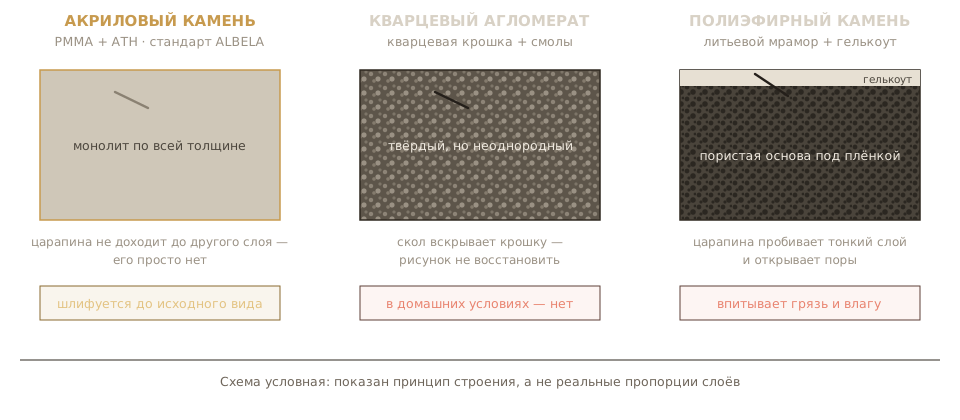
Pros and cons of acrylic stone
Before buying a bathtub or basin it helps to know not just the material's strengths but also its limits — and what to do about them.
- Hygienic. The absence of micropores rules out the build-up of dirt, bacteria and mould.
- Comfortable to the touch. The material quickly takes on the temperature of the water and the room — warm to the touch.
- Seamless monolith. The basin integrates with the countertop with no joints or gaps.
- Repairable. Monolithic through its full thickness: the surface can be restored by polishing.
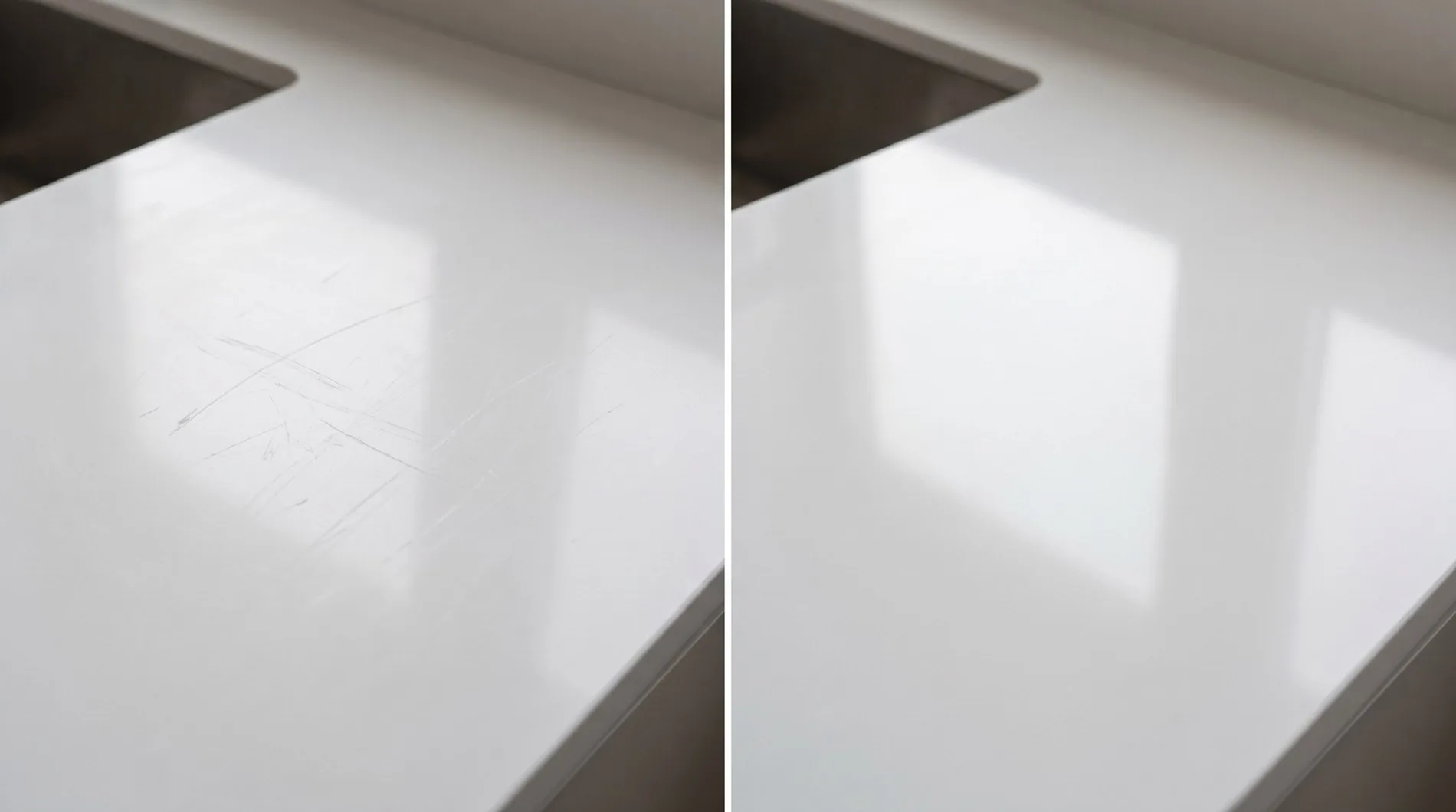
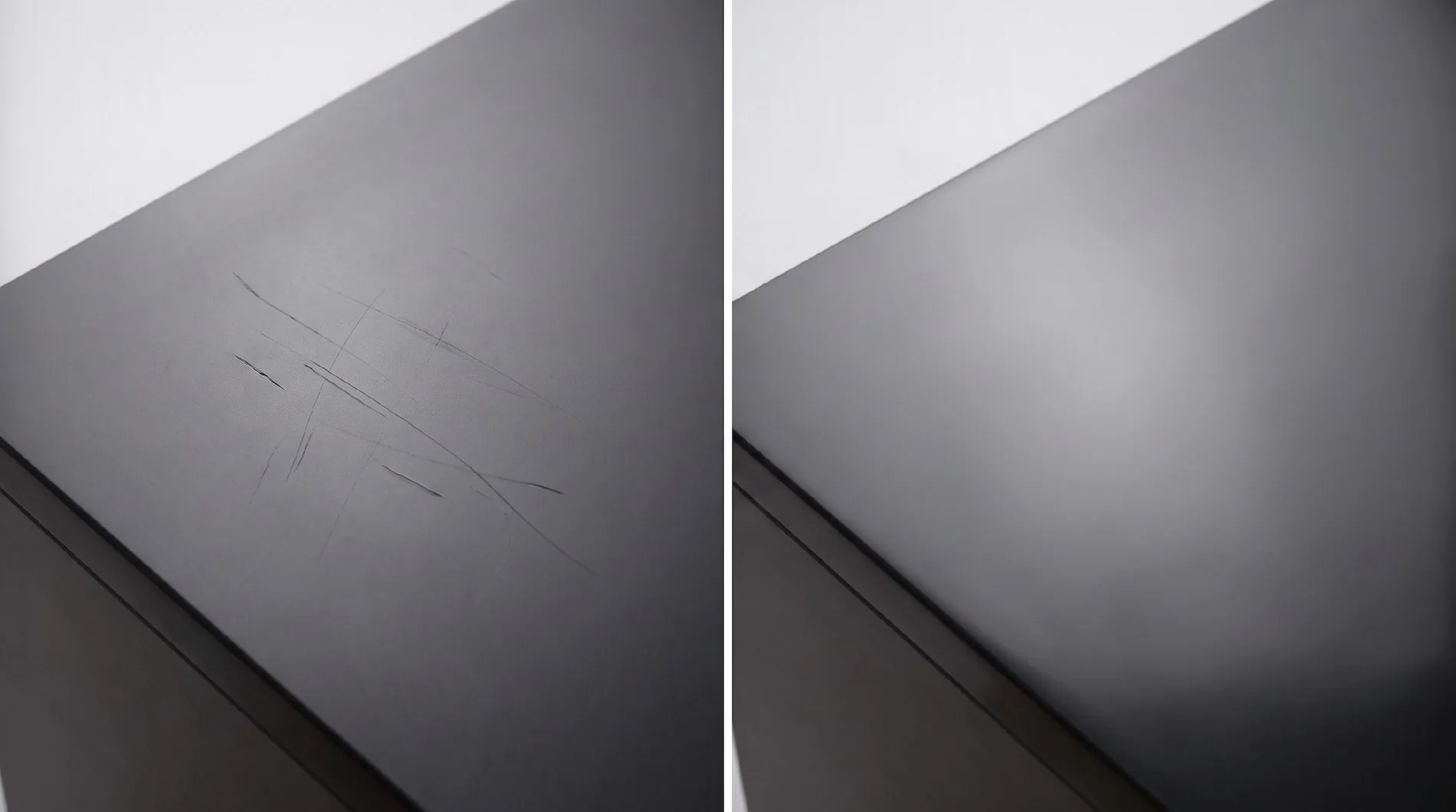
In each pair, the left side shows scratches and the right shows the same area after sanding. The texture is restored with no trace left. Click the image to enlarge.
Daily care and deep cleaning
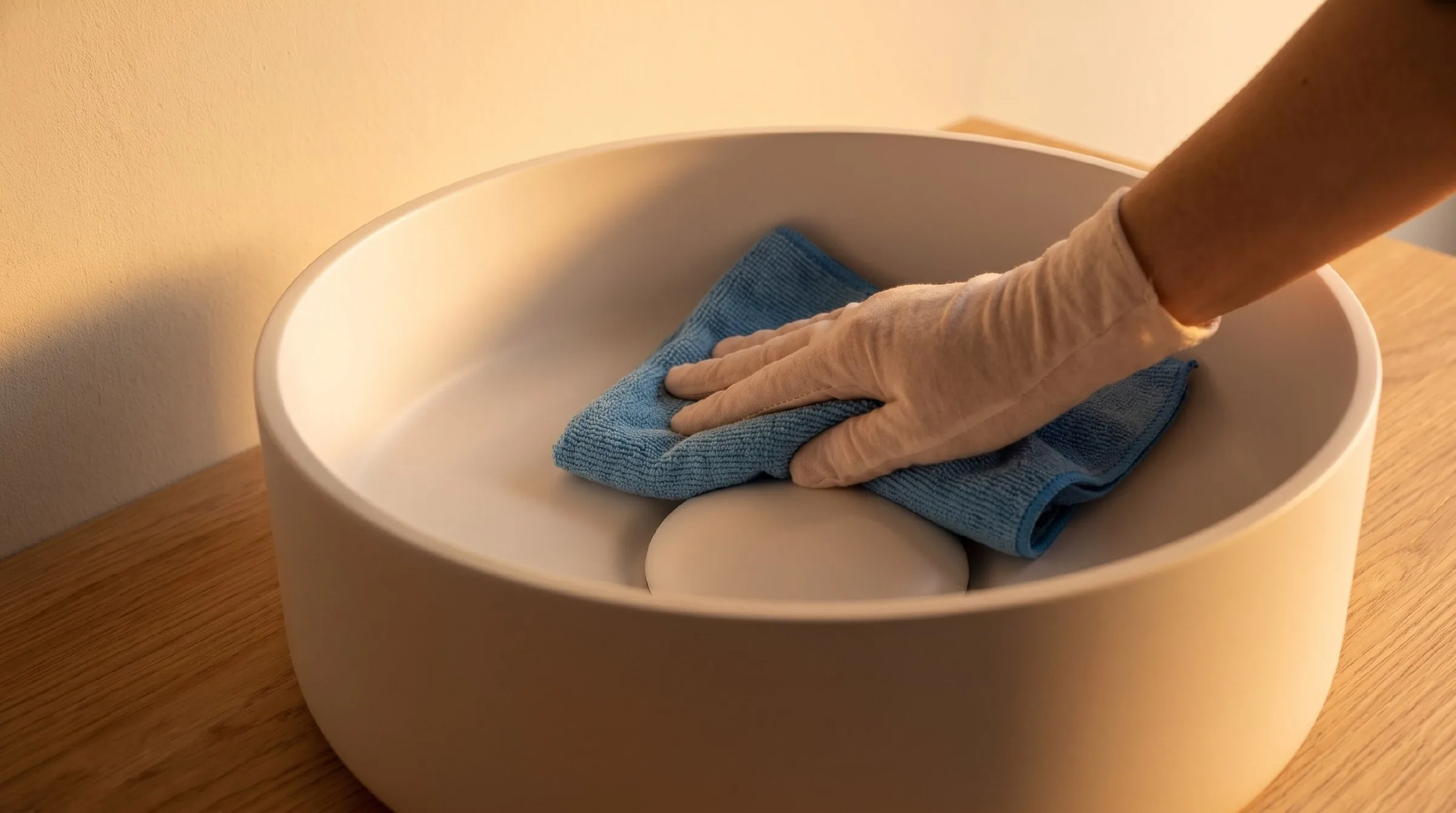
After use, rinse the basin with warm water and wipe it with a soft sponge or microfibre cloth and ordinary soap. Then wipe dry — this, not the strength of any later cleaning, is what prevents limescale.
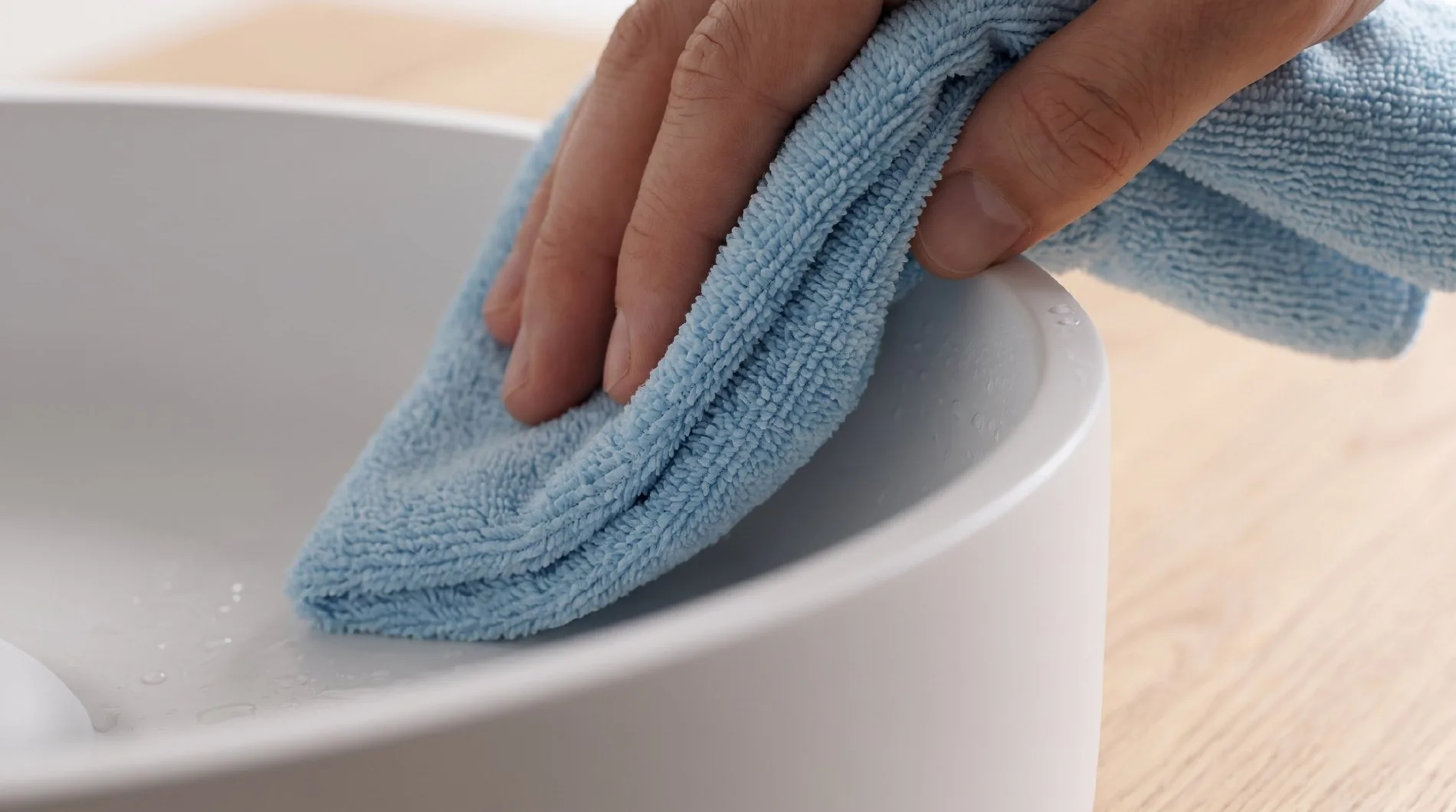
- Apply a liquid pH-neutral cleaner to a damp sponge.
- Spread the product over the surface with soft circular motions.
- Leave it for 2-5 minutes to work.
- Rinse with water and wipe dry.

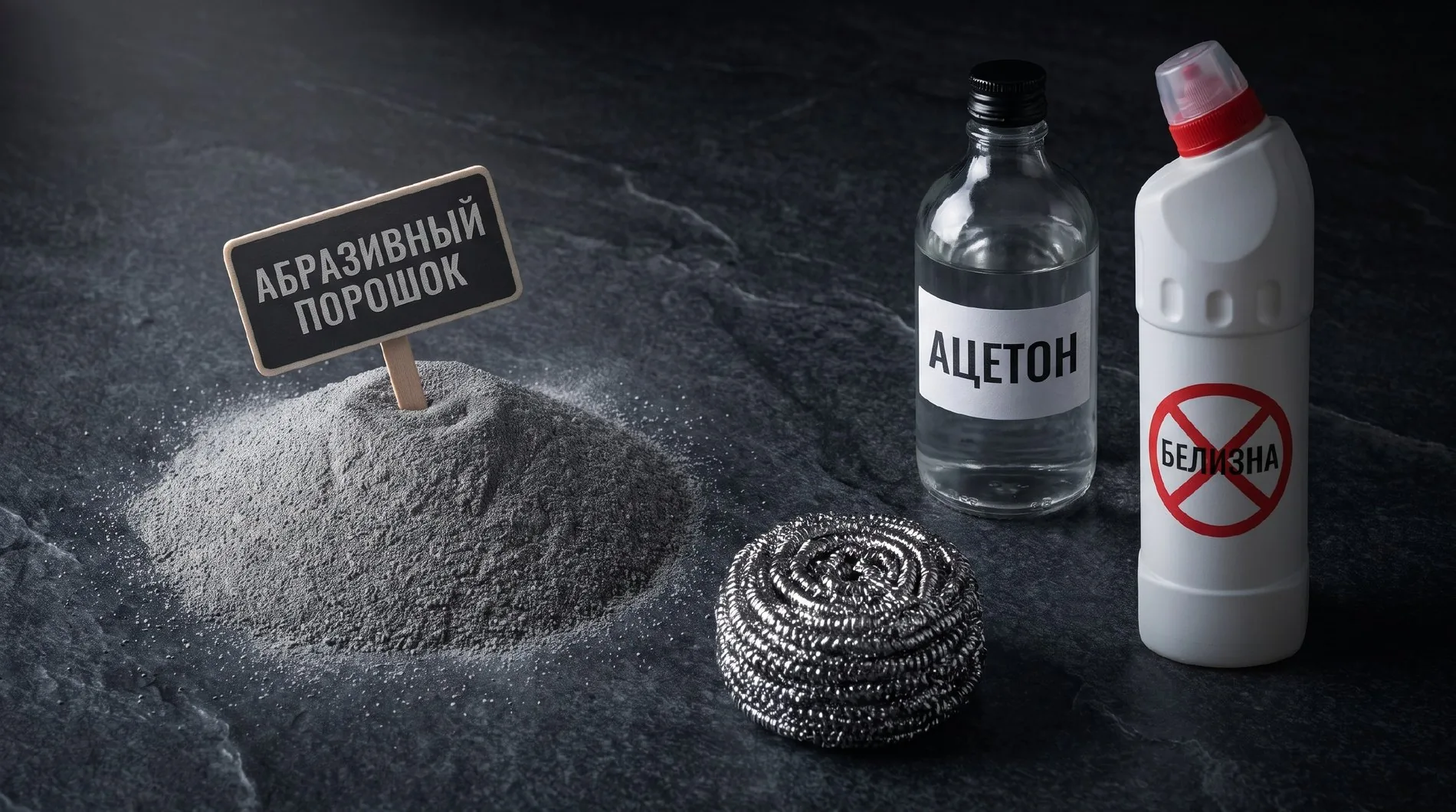
What is strictly off-limits
Questions for the ALBELA process engineer
How do I choose a cleaner for a solid surface basin?
Look at the formula, not the brand. The product should be gel-like or liquid, with a neutral pH around 7. It should contain no abrasive grit, no acetone, no aggressive acids and no high concentration of chlorine. The best choice is a formula designed specifically for acrylic stone.
What should I do about scratches or dye stains on the basin?
Acrylic stone is monolithic through its full thickness, so light marks and scratches come out with polishing. If a soft gel cannot shift stains from wine, coffee or beetroot, use a polishing paste. Deep damage is best left to a technician for sanding — afterwards the surface looks new again.
Can boiling water be poured into a solid surface basin?
A sharp temperature swing is not good for the material. When pouring out near-boiling water, open the cold tap at the same time — that spreads out the temperature change and prevents thermal shock.
How does acrylic stone differ from quartz agglomerate in terms of care?
Acrylic stone is non-porous and monolithic through its full thickness, so it can be sanded and polished back to its original look. Quartz agglomerate is harder, but once damaged its pattern is almost impossible to restore at home. Polyester stone varies: cheap castings under a thin gelcoat reveal a porous base underneath, though there are also polyester slabs that are uniform through their mass. What they share is that the binder is not acrylic, and this kind of material cannot be thermoformed.
Does cleaning with the wrong product void the warranty?
Damage from abrasives, solvents and aggressive chemicals is a breach of the usage rules, not a manufacturing defect, and the warranty does not cover it. The material itself remains repairable, though: marks from this kind of cleaning can usually be removed by polishing.
How often does a piece need polishing?
As needed. With daily care using a soft sponge and drying afterwards, the surface keeps its look for a long time without extra procedures. Polishing is needed once a web of micro-scratches or dullness appears in a high-use area.